
Last updated on September 8th, 2026 at 07:50 am
A customizable keyboard isn’t one thing. It’s up to nine: swapping switches, changing keycaps, remapping keys in firmware, tuning the sound with foam and lube, and more. Some boards let you change nearly everything. Others stop at switches and keycaps.
This guide to the best customizable keyboards is for anyone who wants a board they can make their own, whether that means a first switch swap or full QMK remapping. We picked five and checked each for hot-swap support, firmware options, and current Amazon availability. For every pick, you’ll see where it’s strong and where it’s limited, what you’ll still need to buy, and which changes you can make on day one without a soldering iron.
How we choose: Specs came first, not brand names. Each pick was checked against the manufacturer’s specification page and firmware documentation for hot-swap support, QMK/VIA availability, and which of the nine customizations it allows. The trade-offs stay in, like the AULA F75 having no QMK/VIA at all. Every board has a live Amazon listing, and commissions never decided which boards made the cut.


Quick Comparison Table
All five boards are prebuilt and hot-swappable, so you can change switches without soldering. The table shows what differs: layout, firmware, and which mods each board supports.
Check Price
Check Price
Check Price
Price tiers are approximate and can change over time.
The 5 Best Customizable Keyboards
1. Keychron Q1 Max: Best Overall
Image credit: (Amazon)
The Keychron Q1 Max is the best overall customizable keyboard because it puts an aluminum gasket-mounted case, hot-swap sockets, QMK/VIA firmware and wireless in one purchase. We rank it first because it leaves almost no customization level uncovered.
Switches and keycaps change on day one with no soldering, and the stock Gateron Jupiter switches come pre-lubed. Remapping keys, layers and macros happens in the browser. The screw-in stabilizers are the mod-friendly kind, but lubing them or tuning the foam means opening the case, which is a teardown job, not a first-day one. Case structure is the one limited area, since plates and knobs can change but the shell can’t.
One annoyance: VIA needs Keychron’s JSON file loaded before it recognizes the board.
Deep firmware and hardware options
Mod-friendly screw-in stabilizers
Solid aluminum gasket-mounted build
Battery rated up to 180 hours
Heavy at about 1.7 kg
VIA setup needs an extra JSON step
Who Should Buy: enthusiasts and upgraders who want one board that supports almost every mod path.
Who Should Skip: you’re on a tight budget or want something light enough to carry daily.
2. EPOMAKER x AULA F75: Best Budget
Image credit: (Amazon)
The EPOMAKER x AULA F75 is the best budget customizable keyboard because it combines gasket mounting, foam padding, hot-swap sockets and tri-mode wireless at an entry-level price.
It’s an affordable way into physical customization. It ships with pre-lubed LEOBOG Reaper linear switches, and you can swap them and the keycaps right away. The padding is already inside the case, so foam mods are less urgent than on most boards. Keycap profile varies by version, so check the listing before you buy.
Firmware is the catch. The vendor driver covers remapping and lighting, but without QMK or VIA you won’t get the layer depth Keychron boards offer. A teardown of the board also found the “leaf-spring” gasket claim overstated, so we call it a silicone-tab gasket mount. It’s a real gasket-style build, just a plainer one than the marketing suggests.
Hot-swap sockets for 3-pin and 5-pin switches
Gasket mount with five-layer padding
Affordable entry into gasket-mount boards
Pre-lubed linear switches
Vendor driver only, no QMK or VIA
Gasket marketing oversells the build
Who Should Buy: first-timers who want to start with switches and keycaps.
Who Should Skip: you want QMK or VIA layers and deeper remapping.
3. Keychron V1 Max: Best for Beginners
Image credit: (Amazon)
The Keychron V1 Max is the best customizable keyboard for beginners because it arrives fully assembled and wireless, yet keeps the same hot-swap sockets and QMK/VIA firmware as Keychron’s premium boards.
Nothing on it needs replacing before you start modding. A good first move is a new keycap set, then switches, both with no soldering. The stock double-shot PBT keycaps and Gateron Jupiter switches are solid starting points. A Mac/Windows toggle and VIA keep your first remaps approachable. At about 770 g assembled, it weighs less than half as much as the Q1 Max.
The compromise is the build. The ABS case and simpler gasket design sit a tier below the Q series. Some owners say the stock stabilizers improve with a little lube, though results vary.
Fully assembled out of the box
Full QMK/VIA firmware
Solder-free hot-swap sockets
Light at about 770 g
ABS case feels less premium than the Q series
Stock stabilizers may need lube
Who Should Buy: beginners who want solder-free swaps and full firmware control.
Who Should Skip: you want a metal case or the heft of an aluminum board.
4. Glorious GMMK 3: Most Modular

Image credit: (Amazon)
The Glorious GMMK 3 is the most modular customizable keyboard because its aluminum plate, gasket system and other structural parts are built to be swapped, not just its switches and keycaps.
Glorious describes nine modular points, including the top frame, plate, gaskets and knob. That makes it one of the deepest physical customization options in a mainstream prebuilt. It ships with Glorious Fox linear switches and double-shot PBT keycaps, both easy to change. Swapping structural parts means opening the case, so treat that as a project, not a first-day change.
The GMMK 3 HE goes a step further, with dual sockets that accept both standard MX and magnetic switches on the same PCB.
Firmware is the weak spot. CORE is Windows software, and Glorious publishes QMK source only for the standard model in wired mode. There’s no official VIA. Community threads criticize CORE, and Glorious has acknowledged that, though the feedback is anecdotal.
Deep structural modularity
Aluminum plate with gasket system
Hot-swap MX sockets
Three layout sizes
No official VIA, and CORE gets mixed feedback
Wired only on the standard model
Who Should Buy: tinkerers who want to swap structural parts.
Who Should Skip: you want in-browser VIA remapping or a wireless board.
5. Keychron K10 Max: Best Full-Size

Image credit: (Amazon)
The Keychron K10 Max is the best full-size customizable keyboard because it pairs a full numpad with hot-swap sockets, QMK/VIA firmware and wireless connectivity in a simpler plastic build.
It ships with Keychron’s own switches and acoustic foam, and the switches can be swapped without soldering. An OS toggle covers Mac and Windows, and the Launcher handles remapping. Keychron says the board supports third-party screw-in PCB stabilizers, a common upgrade that means opening the case.
The downside is the mount. A tray-mounted steel plate keeps the board rigid, with no PCB movement as you type. Some typists prefer the softer feel of a gasket mount, and the Q1 Max is the better match for them. Full-size boards also take up a lot of desk, and this one measures about 17 inches across.
Full numpad with QMK/VIA firmware
Rigid steel-plate typing feel
Rigid tray mount with a steel plate
Acoustic foam included
ABS case and tray mount feel plainer than gasket boards
Wide footprint of about 17 inches
Who Should Buy: anyone who needs a numpad and wants full firmware control.
Who Should Skip: you want a metal case or a softer gasket-mount feel.
What Makes a Keyboard Customizable?
A customizable keyboard is one you can change in feel, sound and behavior without replacing it. Nine things decide that, and RGB lighting is only one of them. Each is tagged by what it takes: nothing extra, a purchase, opening the case, or a choice at purchase.
- Switches (extra purchase): swap them to change feel and sound.
- Keycaps (extra purchase): change material, profile and legends.
- Firmware (nothing extra): remap keys, layers and macros in software.
- RGB (nothing extra): effects, color and brightness.
- Stabilizers (opening the case): fix rattle on larger keys with lube or replacements.
- Acoustics (opening the case): foam, tape or pads change the sound.
- Case and structure (opening the case): plates, knobs and weights, where the board allows.
- Layout (chosen at purchase): smaller layouts rely on layers to fill the gaps.
- Connectivity (nothing extra): wired, 2.4 GHz or Bluetooth.
Hot-swap sockets. A hot-swap board holds switches in sockets, so you pull one out and push another in with no soldering. Most hold standard MX-style switches. Five-pin switches add two plastic legs, which you clip if your board only has three-pin holes. Magnetic and low-profile switches need their own sockets, so check before you buy. Our switch guide covers what to choose, and our best hot-swappable keyboards roundup lists more boards with swappable switches.
QMK and VIA. QMK is open-source keyboard firmware, and VIA is the app that remaps keys, layers and macros without code. Keychron’s Launcher does the same job in a browser. Support differs by exact model. The AULA F75 uses only a vendor driver, and the GMMK 3 has QMK source for the standard wired model, not the HE. Configuring often needs a wired connection.
Start with switches, keycaps and firmware. They need nothing beyond a puller. Stabilizers, foam and case parts come later.
Prebuilt vs Barebones vs DIY Keyboard Kits
The right path depends on how much you want to choose yourself. A prebuilt gives you convenience, a barebone gives you control, and a DIY kit gives you the most freedom and the most work.
A barebone looks cheaper, but its price leaves out switches and keycaps. Add them, and the total often lands close to a prebuilt. The Keychron Q1 Max shows it: the barebone version costs less than the assembled one, but not by much, and you still choose and pay for your own parts. Pick a barebone for control, not savings.
- New to customizing: an assembled hot-swap board like the Keychron V1 Max. Your first changes are keycaps, then switches.
- Want to choose every part: the Keychron Q1 Max barebone, which skips the stock switches and keycaps.
- Want to swap structural parts: the Glorious GMMK 3, which is built around replaceable components.
Every board we picked is sold assembled, and none needs soldering. A switch puller is often included, and it’s a small purchase if not.
Frequently Asked Questions
The Keychron Q1 Max. It combines an aluminum gasket-mounted case, hot-swap sockets, QMK/VIA firmware and wireless, so it supports almost every customization level in one board.
Yes, with a hot-swap board. You can change switches and keycaps, remap keys in software and adjust lighting without a soldering iron. Case mods may need disassembly, but not soldering.
Usually not like for like. Budget prebuilts tend to undercut the cost of buying parts separately. Building pays off at the premium end or when you want a specific feel or sound.
On most enthusiast boards, yes. They use MX-style stems, so a wide range of keycap sets fit. Check the bottom row on some gaming boards, which can use non-standard sizes.
Yes. Switch type, materials and lube all change pitch and volume, and so do the plate, case and foam. We wouldn’t promise a specific sound.
A keycap puller and a switch puller, which often come in the box. Optional extras are a lube kit see our guide to lubing switches, a small screwdriver for case mods, and tweezers for stabilizers.
Final Recommendation
The best customizable keyboards are the ones that match how much you want to change.
- Want one board that covers almost every mod path? Choose the Keychron Q1 Max.
- Starting out and want room to grow? Choose the Keychron V1 Max.
- Watching your budget and fine with a vendor driver? Choose the EPOMAKER x AULA F75.
- Want to swap structural parts, not just switches? Choose the Glorious GMMK 3.
- Need a numpad? Choose the Keychron K10 Max.
- Want to pick every part yourself? The Q1 Max also comes as a barebone.
Whichever you pick, start with switches, keycaps and firmware. Add stabilizer, foam and case mods once you know what you want to change.
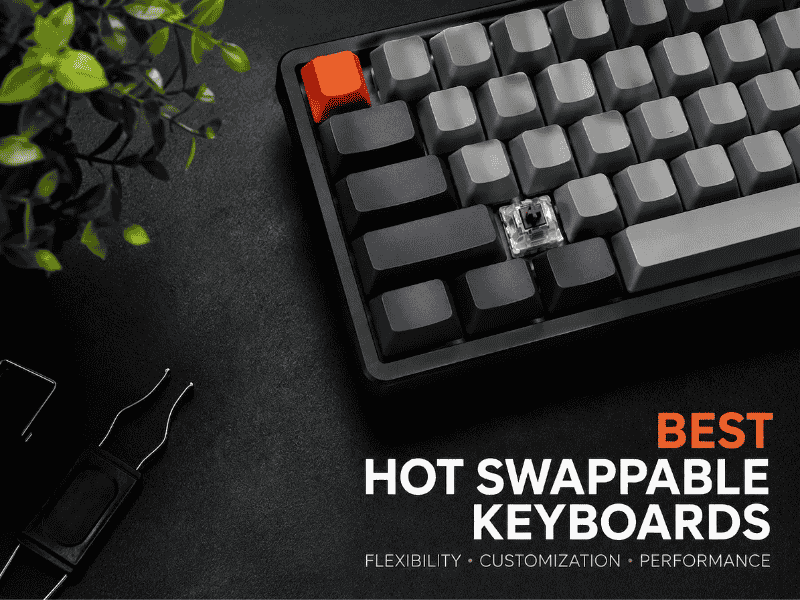
Looking for the Best Hot Swappable Keyboards? We compare socket type, QMK/VIA support, and layout across 8 picks so you buy the right one.
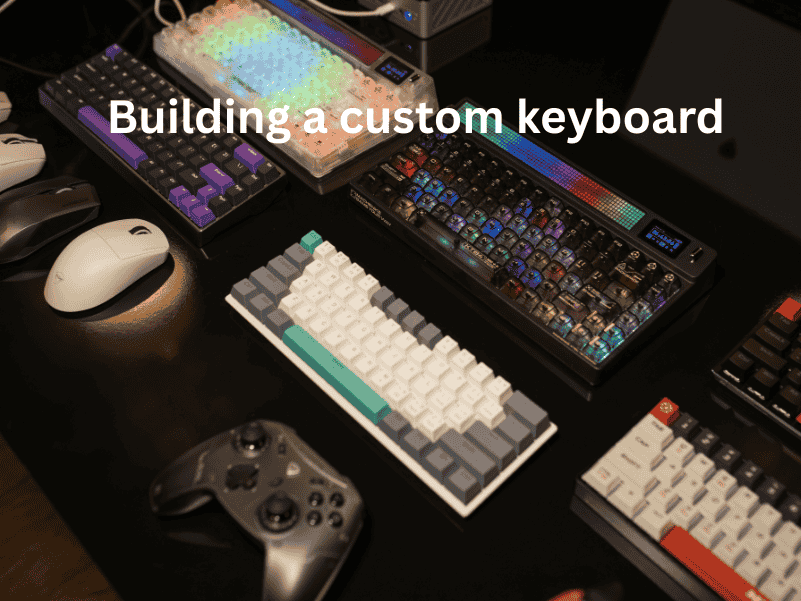
How to build a custom keyboard: step-by-step assembly guide, component selection tips, and customization tricks for your perfect typing setup.
We tested the specs, not just the hype. See our picks for the best keyboards for programmers in 2026, budget to premium, Mac to Linux.
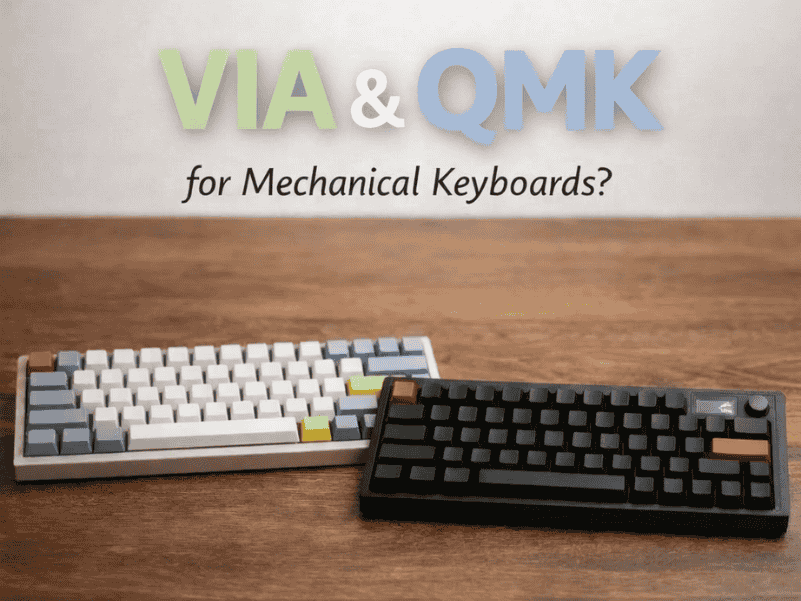
Learn what are VIA and QMK for mechanical keyboards, how they differ, and why they’re popular for customizing layouts, macros, and features.