The Galaxy80’s full‑aluminum shell feels rock‑solid without being brick‑heavy. Clean chamfered edges catch just enough light to show off the satin finish, and the tenkeyless footprint frees up desk real estate for mouse movement. Inside, a leaf‑spring gasket structure cushions the plate against the frame, adding a gentle bounce that softens each keystroke. Five layers of foam—under the plate, between the PCB, along the case walls and under the feet—dampen hollowness so the board’s voice stays tight and muted. Stabilizers come screw‑in and pre‑lubed, so rattle is minimal right out of the box.
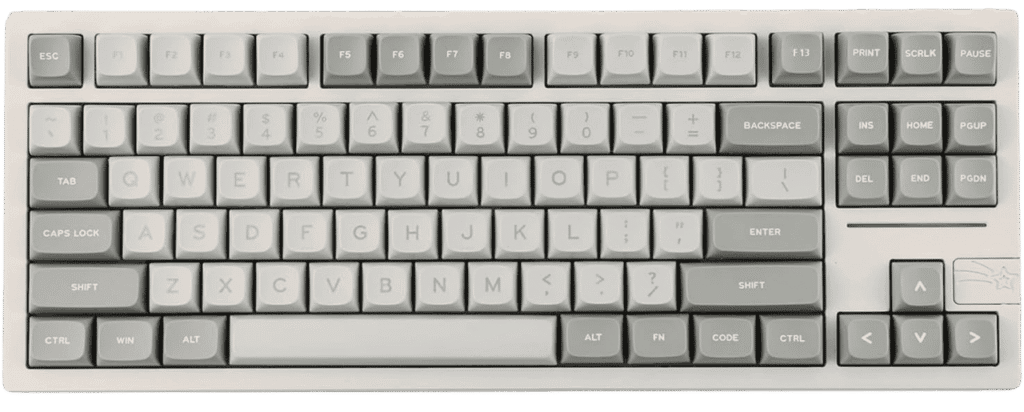
Connectivity and Modes
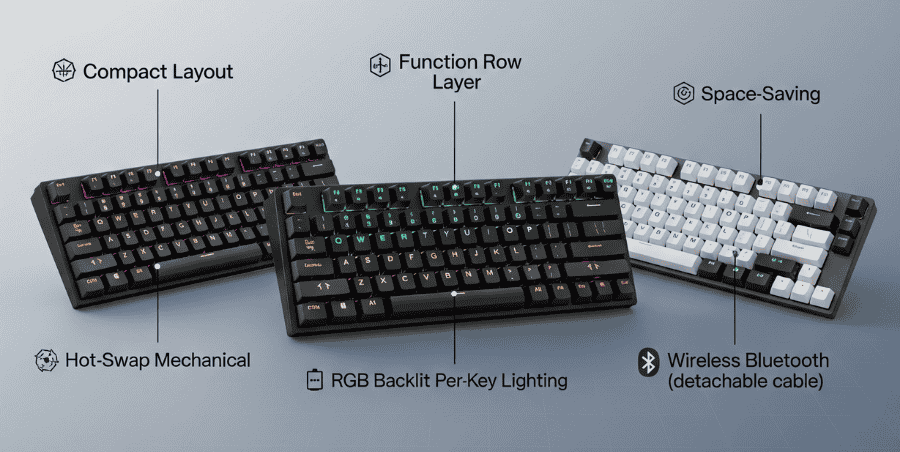
Switch instantly between wired USB‑C, Bluetooth 5.1 and 2.4 GHz wireless via the included tiny dongle. The keyboard can remember up to three Bluetooth hosts and one 2.4 GHz link—flip between devices with a simple key combo. In wired or 2.4 GHz mode you get a full 1000 Hz polling rate; drop back to Bluetooth for around 90 Hz, which still feels smooth for typing and light gaming. A hidden magnetic dongle garage under the shooting‑star emblem keeps the adapter safe when you’re on the go.
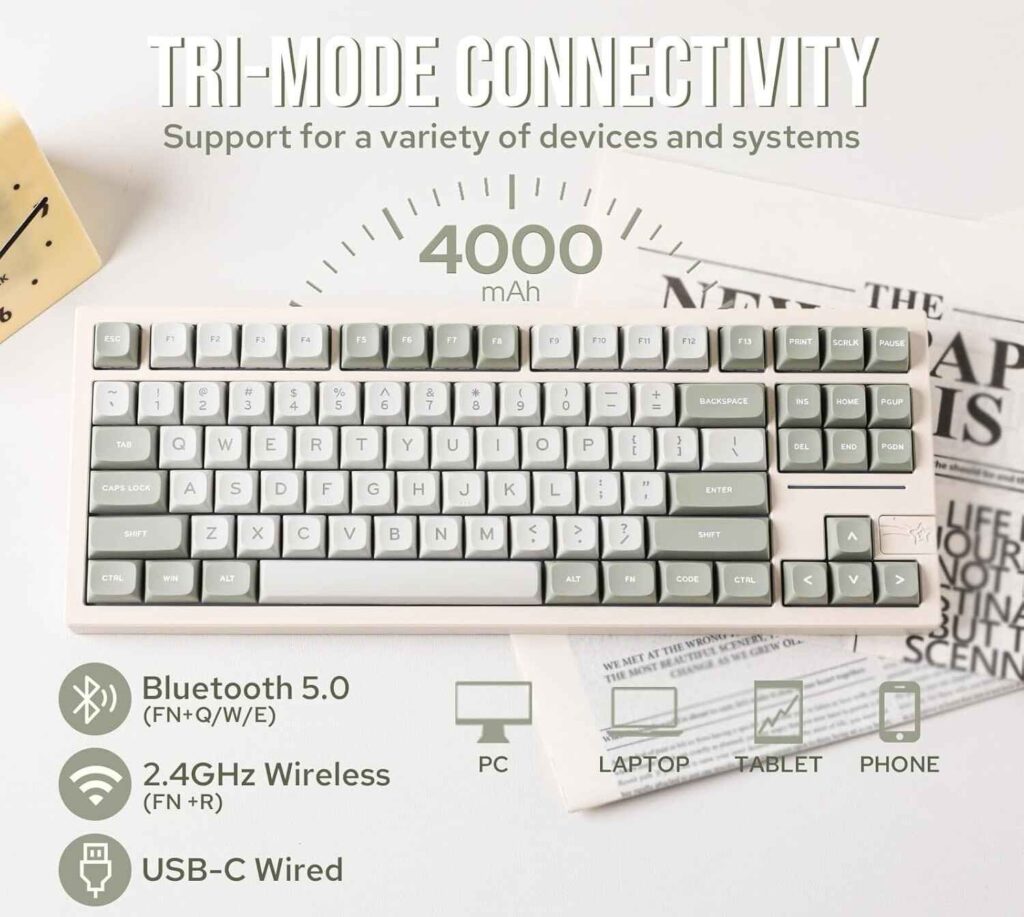
Typing Feel and Sound
South‑facing, hot‑swappable MX‑style sockets mean you can drop in any 3‑pin or 5‑pin switch without soldering. The stock Feker Marble White linears are silky smooth and lightly lubed, but the board’s real magic is its acoustic profile: gasket mount plus flex‑cut polycarbonate plate deliver a soft, rounded thock, while the foam layers kill any ping or ring. The typing weight feels balanced—neither too squishy nor too stiff, with enough feedback to stay precise on longer sessions.
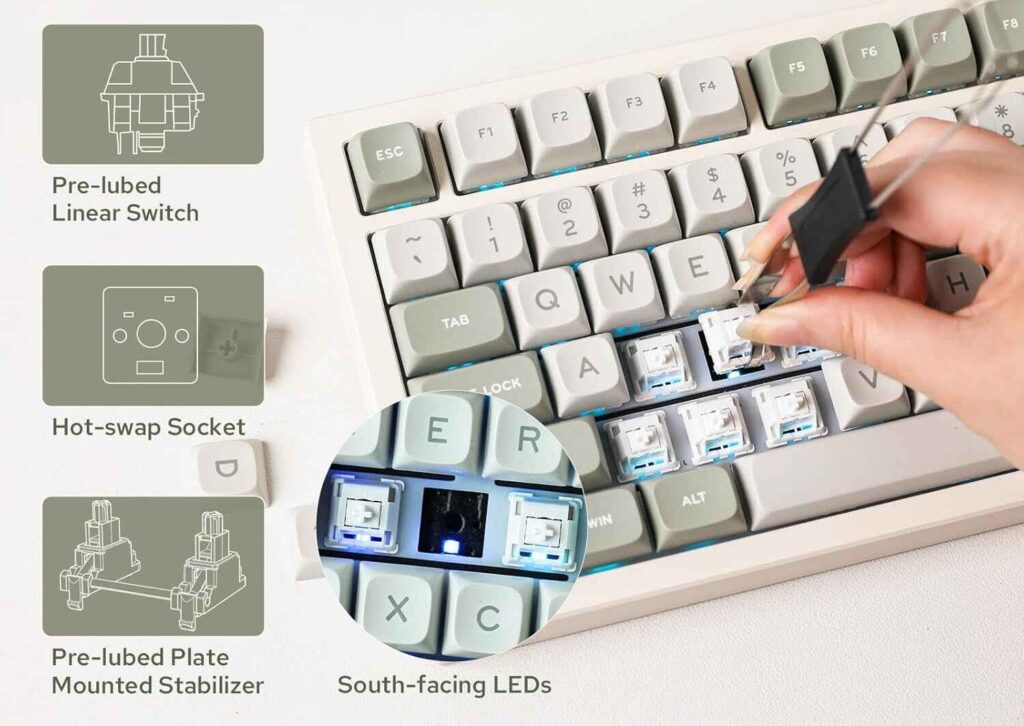
Lighting and Software
Underneath double‑shot PBT keycaps you’ll find bright underglow and per‑key RGB with 19 preset effects plus music‑sync modes that pulse along to your audio. All customization—lighting, key remaps, macros—happens in Epomaker’s desktop utility. No QMK or VIA here, but the software is straightforward: build up to three layers of layout, assign macros or media controls, tweak brightness and animation speed, and save everything to the onboard memory so your settings travel with the board.
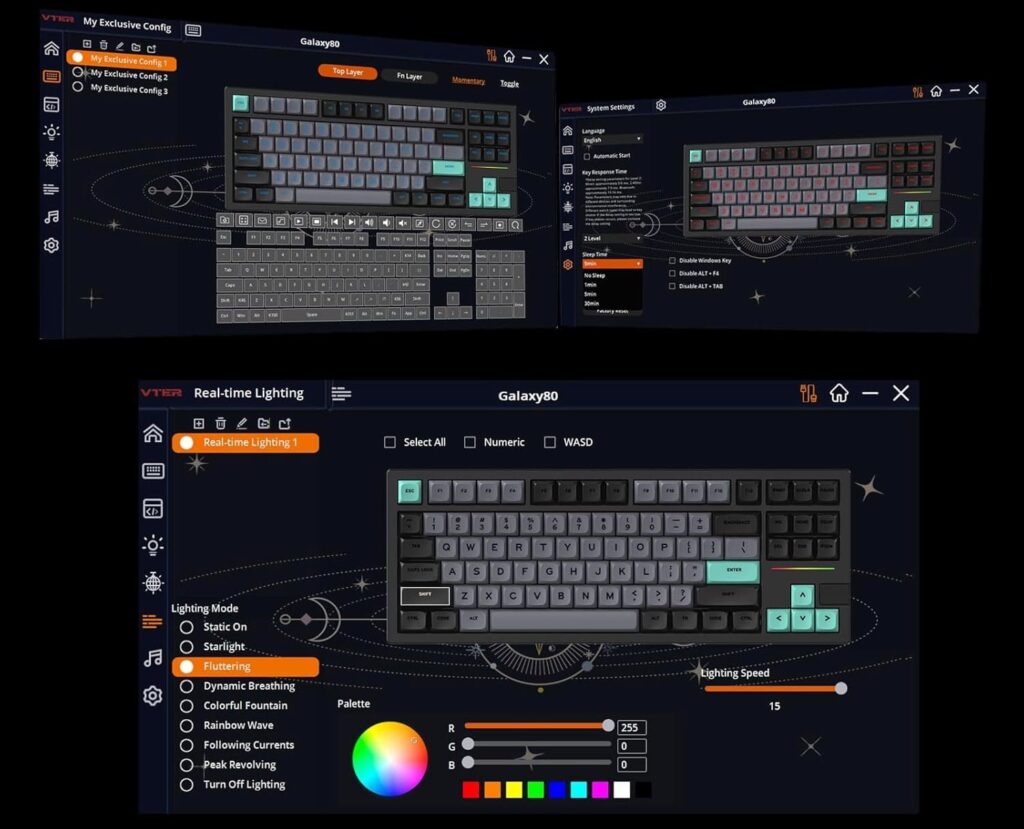
Technical Specifications
| Specification | Detail |
| Model | EPOMAKER x Feker Galaxy80 |
| Layout | Tenkeyless (87 keys) |
| Case | Full‑aluminum alloy |
| Mount | Leaf‑spring gasket + multi‑layer foam |
| Plate | Flex‑cut polycarbonate |
| Switch Sockets | Hot‑swappable MX‑style (3‑pin & 5‑pin) |
| Stabilizers | Screw‑in, factory‑lubed |
| Keycaps | Double‑shot PBT |
| Connectivity | USB‑C wired, Bluetooth 5.1, 2.4 GHz wireless |
| Polling Rate | 1000 Hz (USB-C/2.4 GHz), ~90 Hz (Bluetooth) |
| Battery | 4000 mAh Li‑ion |
| Battery Life | Weeks (no RGB), several days (with RGB) |
| RGB | Per‑key + underglow, 19 effects, music sync |
| Software | Epomaker desktop utility |
| Onboard Memory | 3 layers |
| Dimensions (L×W×H) | 356 × 135 × 39 mm |
| Weight | ~1.1 kg |
Verdict
The Galaxy80 nails the essentials—solid aluminum chassis, floating‑key gasket mount, hot‑swap flexibility, tri‑mode wireless and a refined, muted sound signature—without overcomplicating the experience. The only real compromise is proprietary software instead of open‑source firmware, but for most users the desktop utility covers every customization you’ll need. If you want a TKL board that feels premium, adapts to any setup and sounds as good as it types, the EPOMAKER x Feker Galaxy80 is hard to beat.