
Last updated on June 25th, 2026 at 02:29 pm
Buying a budget keyboard sounds simple until you try. You’re met with hundreds of options, all promising the same things at similar prices. Some look great but feel terrible. Others have glowing reviews but arrive rattly, hollow, or just plain annoying within a week. The goal isn’t to find the cheapest option it’s to avoid spending money on something you’ll want to replace in a month.
This guide exists for that reason. We’re not chasing the lowest price or hyping whatever’s trending. We focus on keyboards that deliver real value where it actually matters: how they feel to type on, how well they hold up, and whether they’re worth keeping long-term. Here, “best” means the least regret, the most comfort, and the fewest compromises for your money.
We’ll focus on the $25 to $80 range. In this bracket, you can realistically expect solid daily performance, decent build quality, and at least one standout feature whether that’s hot-swap sockets, reliable wireless, or switches that don’t feel like typing on wet cardboard. You won’t find premium materials or perfectly tuned acoustics here. But the gap between a good budget keyboard and a bad one almost always comes down to which corners were cut. Our goal is to help you tell them apart and end up with something that feels good to use, not just easy to buy.
How to Choose Your Budget Keyboard
Choosing a budget keyboard isn’t about finding the cheapest option. It’s about spotting where a manufacturer chose to spend its limited budget and whether those choices actually matter for how you use a keyboard every day. Here’s how to cut through the noise.
Start here, because your main activity points you toward the right features.
For typing and office work: Prioritize typing feel, noise level, and wireless convenience. A keyboard that’s quiet and comfortable over long sessions is worth more than one with flashy extras.
For gaming: Focus on reliable latency (wired is almost always better), durable switches, and anti-ghosting. RGB looks nice, but consistent response is what wins games.
For beginners who want to customize: Your number one priority is hot-swappable switches. This single feature future-proofs your purchase more than anything else at this price range it lets you swap switches later without soldering, which means you’re not locked into your first choice.
This is where “budget” and “value” part ways. A good budget board spends on the things that protect the typing experience. A bad one sacrifices those for gimmicks excessive RGB, a flashy case that flexes, or branding over build quality.
Here’s what to prioritize and what to let slide:
Build quality and stability matter because a non-flexing case and solid plate prevent that hollow, inconsistent feel under your fingers. The compromise you accept is materials a thick plastic case is completely fine at this price. You’re just not getting aluminum.
Switch quality matters because reputable switches from brands like Gateron or Outemu offer better feel and longevity than generic options or membranes. The compromise is lubrication budget switches often feel decent but not perfectly smooth out of the box. That’s fixable later if you want to mod.
Keycap material matters more than most people realize. PBT keycaps resist shine and feel better the longer you use them. The compromise is legend style doubleshot legends are a bonus, but pad-printed PBT is still significantly better than shiny ABS that starts looking worn within months.
Hot-swap sockets are the one feature worth seeking out even if it costs a few dollars more. There’s no real downside to having them. If you see this feature in your budget, it’s almost always worth prioritizing.
Wired vs. wireless: Choose wired if you game or want zero-latency reliability with no battery management. Choose wireless if you want a cleaner desk or need to switch between devices. One important note: in the budget range, Bluetooth can sometimes mean connection drops or slight latency. If you go wireless, a 2.4GHz dongle is the more reliable option for active use.
Layout size: Full-size (100%) makes sense if you rely on a number pad for data entry. Tenkeyless or 75% is the sweet spot for most people you keep your arrow and function keys while reclaiming desk space. 60% is for those who want maximum portability and don’t mind using function layers for missing keys.
Switch type: Linears (Red, Black) are smooth and quiet good for gaming or shared offices. Tactiles (Brown and similar) give you a subtle bump you can feel without hearing, making them a solid all-rounder for typing and gaming. Clicky switches (Blue) are satisfying but loud great if you work alone, not so great if anyone else is nearby. If you’re unsure, start with a linear or tactile from Gateron or Kailh.
For gamers specifically focused on switch responsiveness and low latency, our best keyboard switches for gaming guide goes deeper on that.
Before You Buy: Quick Checklist
Run through these before clicking purchase:
- Does this match my primary use case from Step 1?
- Does it have a reputation for solid build quality no major flex, decent stabilizers?
- Are the keycaps PBT?
- Does it have hot-swap sockets?
- Have I chosen the right layout and connectivity for my actual desk setup?
If you can check most of those boxes, you’re looking at a keyboard that delivers real value not just a low price.
At a Glance: How These 5 Keyboards Compare
Before diving into the full reviews, here’s a side-by-side look at the five picks so you can quickly spot which one fits your needs.
What this tells you at a glance: If hot-swap support and keycap quality matter to you, the Keychron C2 Pro and Epomaker HE68 Lite are the clear front-runners. The AULA F75 Pro and Kisnt Wireless still use PBT keycaps a win at this price but skip hot-swap. The Logitech K780 is the outlier: it’s not a mechanical board, so it trades switch feel and keycap quality for effortless multi-device convenience.
Best Budget Keyboard Recommendations
1. Best for casual typing (Keychron C2 Pro)

Image credit: (Amazon)
The Keychron C2 Pro is one of those rare budget keyboards that doesn’t make you feel like you compromised. It’s a full-size wired mechanical board that focuses entirely on typing quality and long-term flexibility, and it delivers on both without asking you to spend more than you should.
What stands out first is the build. The case feels solid with no noticeable flex, and the doubleshot PBT keycaps have that slightly textured feel that holds up well over months of daily use. They don’t shine up or wear down quickly, which is something cheaper ABS boards start showing within weeks.
The hot-swap sockets are the feature that really sets this board apart at the price. If you buy it with Gateron Reds and decide later that you prefer a tactile switch, you pop them out and swap them in without a soldering iron. That kind of flexibility is genuinely rare under $80, and it means you’re not locked into your first choice.
QMK and VIA support is the other big win. Every key on this board is fully remappable through a simple interface, which is something most budget keyboards don’t offer at all. Whether you want to move your Caps Lock to something useful or set up macros for work, it’s all there without needing to dig into complex software. The wired-only setup is an intentional trade-off, not an oversight. Keychron skipped wireless to keep the price down and the performance consistent. For a desk setup where the cable isn’t a problem, this is a perfectly reasonable call.
-
Hot-swappable switches make future upgrades easy and solder-free
-
Full QMK/VIA support for deep, lasting customization
-
Doubleshot PBT keycaps that stay looking clean over time
-
Solid, flex-free build that types consistently
-
Works across Windows, macOS, and Linux without driver installs
-
Wired only, so not ideal if you want a cable-free desk
-
RGB is south-facing and fairly subtle, not the most vivid lighting setup
The Keychron C2 Pro is the safest pick in this entire guide. It skips everything that doesn’t matter and puts its budget into the things that do: build quality, keycaps, hot-swap support, and programmability. If you type a lot and want a keyboard you can grow with rather than replace, this is where to start. And if you regularly work with spreadsheets or numbers, the full-size layout with a dedicated number pad makes it a natural fit for that kind of work too. See our best keyboards for accountants guide if that’s your primary use case.
2. Best Budget Gaming Keyboard: Epomaker HE68 Lite

Image credit: (Amazon)
The Epomaker HE68 Lite is an interesting pick at this price point, and Hall Effect switches are the reason why. Most budget gaming keyboards ship with standard mechanical switches and call it a day. The HE68 Lite goes a step further with magnetic Hall Effect technology, which means the switches have no physical contact points to wear down over time. For a board in the sub-$80 range, that’s a legitimately different offer.
Hall Effect switches are still relatively uncommon at budget prices, and they bring two real advantages. First, they’re extremely consistent. Every keypress registers at the same point every time, which matters more than most people realize during fast typing or gaming sessions where half-pressed keys can cause missed inputs. Second, because there’s no physical contact, they have a much longer theoretical lifespan than traditional mechanical switches.
The 65% layout is a deliberate trade-off worth thinking about before you buy. You lose the number pad and the function row, but you keep your arrow keys, which makes it more usable than a 60% for most people. The freed-up desk space is a genuine benefit for gaming, especially if you use a larger mousepad and need room to move.
Build quality feels appropriate for the price. The PBT keycaps have a solid texture and won’t start shining up after a few months of use. The case has enough weight to it that it stays put during use. Hot-swap sockets are present here too, so if you want to try a different switch feel down the line, that option is open to you.
QMK and VIA support rounds it out. Full key remapping and macro programming are available, which is more than most gaming keyboards at this price bother to include.
The one area where it doesn’t stand out is RGB. It’s present and functional, but don’t expect the kind of vivid, shine-through lighting you’d get on a dedicated gaming board at twice the price.
-
Hall Effect switches offer consistent actuation and excellent long-term durability
-
Hot-swappable sockets for easy switch changes down the line
-
Full QMK/VIA support for remapping and macros
-
PBT keycaps that hold up well over time
-
Compact 65% layout frees up real desk space for mouse movement
-
Wired only, no wireless option
-
RGB is functional but not particularly vibrant compared to dedicated gaming boards
If you’re shopping for a budget gaming keyboard and want something that’s genuinely built differently rather than just marketed differently, the HE68 Lite is worth a serious look. Hall Effect switches at this price are a real value proposition, and the hot-swap support plus QMK/VIA programmability mean you’re not outgrowing this board anytime soon. For more competitive-focused picks, our best keyboards for Fortnite guide covers switches and layouts optimized specifically for fast-paced gaming.
3. Best for quiet shared spaces (AULA F75 Pro)

Image credit: (Amazon)
The AULA F75 Pro is the pick for anyone who wants a mechanical keyboard but works somewhere noise actually matters. Open offices, shared apartments, late-night sessions while someone else is sleeping it’s built for those situations.
The pre-lubed quiet switches handle the main job well. Downstroke and upstroke are noticeably muted compared to standard mechanical switches, and you still get a smooth, consistent feel under your fingers. It won’t be as silent as a membrane board, but it’s quiet enough to stop being a distraction to people around you.
The 75% layout keeps your function row and arrow keys intact, so your workflow doesn’t change much coming from a full-size board. The doubleshot PBT keycaps feel solid and won’t shine up after a few months of daily use.
Connectivity covers all three modes: Bluetooth for multi-device pairing, 2.4GHz for lower-latency work or light gaming, and wired USB-C when you want no wireless concerns at all. The programmable rotary knob is a small addition that ends up being more useful than expected once it’s on your desk.
One honest caveat: because the switches are tuned for quiet operation, tactile feedback is softer than a standard tactile or clicky switch. If you like to feel every keypress distinctly, that muted bump might feel underwhelming.
-
Pre-lubed quiet switches reduce noise without killing the mechanical feel
-
Triple-mode connectivity covers Bluetooth, 2.4GHz, and wired USB-C
-
Solid build with doubleshot PBT keycaps
-
Programmable rotary knob adds daily utility
-
Softer tactile feedback is a trade-off for the quieter sound profile
-
RGB doesn’t diffuse as evenly as pricier boards
If noise is your main concern and you don’t want to give up mechanical feel to solve it, the F75 Pro is the most practical answer at this price. If you’re after a deeper, cushioned sound profile rather than just quiet switches, our best creamy keyboards guide covers boards tuned specifically for that.
4. Best travel and compact option (Kisnt Wireless)

Image credit: (Amazon)
The Kisnt Wireless is for one specific type of buyer: someone who wants a real mechanical keyboard that fits in a bag without complaint. If that’s you, it’s worth a look. If you need a number pad or dedicated function keys for your daily work, the 60% layout will frustrate you quickly.
The 60% footprint is genuinely small. It sits comfortably next to a laptop, slips into a backpack without taking up meaningful space, and pairs over Bluetooth with phones, tablets, and laptops without any dongle to keep track of. For coffee shop sessions or hotel work setups, that simplicity is the whole point.
The mechanical switches give it a typing feel that no membrane travel keyboard can match. Keypresses feel crisp and consistent, which makes a real difference during longer typing sessions away from your desk.
PBT keycaps are a welcome inclusion at this price point, and the RGB backlighting is useful in dim environments rather than just decorative.
The main limitation worth knowing upfront: it’s Bluetooth only. There’s no 2.4GHz dongle option and no wired fallback. That’s fine for most travel use cases, but if you game or need a rock-solid connection, look elsewhere.
-
Genuinely compact 60% layout built for portability
-
Bluetooth multi-device pairing with no dongle needed
-
Mechanical switches feel noticeably better than membrane travel boards
-
PBT keycaps hold up well over time
-
Bluetooth only, no 2.4GHz or wired option
-
60% layout requires adjusting to function layers for missing keys
The Kisnt Wireless has a clear purpose: give you a real mechanical typing experience in a package small enough to toss in a bag. It’s not trying to compete with your main desk setup, and it doesn’t need to. If you want something lightweight and mechanical that’s ready whenever you are, it earns its spot.
5. Best for Multi-Device workflow (Logitech K780)

Image credit: (Amazon)
The Logitech K780 is the odd one out in this guide, and that’s intentional. It’s not a mechanical keyboard. It doesn’t have hot-swap sockets or RGB lighting. What it does have is the most seamless multi-device switching of any board at this price, and for the right person, that matters more than anything else on this list.
The three Easy-Switch buttons on the top left are the feature that defines this keyboard. You pair it with up to three devices simultaneously a laptop, a tablet, a phone and switch between them with a single keypress. No re-pairing, no menu diving, no delay. If you spend your day moving between screens, that workflow convenience adds up fast.
Connectivity is flexible too. You get Bluetooth for most devices and Logitech’s Unifying receiver for a more stable connection on your main machine. The built-in device cradle along the top is a small but genuinely useful addition for propping up a phone or tablet while you type.
The scissor-style keys have a quiet, laptop-like feel that takes almost no adjustment coming from a standard office keyboard. Typing on it for long sessions is comfortable, and the full-size layout with a number pad makes data entry and spreadsheet work straightforward.
The trade-offs are real though. ABS keycaps will start showing wear faster than PBT. There’s no backlighting, so low-light environments are trickier. And if you’re coming from a mechanical keyboard, the scissor switches will feel noticeably shallower and less satisfying under your fingers.
-
One-touch switching between three paired devices
-
Dual wireless via Bluetooth and Unifying receiver
-
Full-size layout with number pad for data entry
-
Quiet, comfortable typing feel for long sessions
-
Works across Windows, macOS, Android, and iOS
-
Scissor switches won’t satisfy anyone used to mechanical keyboards
-
No backlighting makes it harder to use in dim environments
The K780 is not for keyboard enthusiasts. It’s for the person with three devices on their desk who wants to type on all of them without thinking about it. If that’s your situation, this board solves the problem better than anything else in this price range. If you need mechanical switches or RGB, look at the other picks in this guide instead.
Final Verdict (Best budget keyboards of 2026)
Spending less doesn’t have to mean settling. Every keyboard in this guide proves that the $25 to $80 range can deliver a genuinely satisfying typing experience as long as you know what to look for and which corners you’re willing to accept.
The right pick comes down to how you actually use your keyboard. The Keychron C2 Pro is the safest all-around choice if you type a lot and want room to grow. The Epomaker HE68 Lite brings something genuinely different to budget gaming with its Hall Effect switches. The AULA F75 Pro solves the noise problem without giving up mechanical feel. The Kisnt Wireless is the one to grab if portability is your priority. And the Logitech K780 wins on pure multi-device convenience for productivity-focused users.
If you’re still unsure, go back to the comparison table and match your primary use case to the features that matter most for it. Hot-swap support, keycap material, and connectivity type will narrow it down faster than any spec sheet will.
One last thing worth saying: a budget keyboard is often where people start their journey into mechanical keyboards. It doesn’t have to be your last keyboard. But if you pick the right one, it might surprise you by staying on your desk a lot longer than you expected.
Ready to pick yours? Use the comparison table above to find your match, then click through to check the latest price on Amazon. Stock and pricing on budget boards can shift quickly, so it’s worth checking sooner rather than later.
FAQ’S
It depends on whether you need arrow keys. A 65% keeps dedicated arrow keys while still being compact, making it the more practical choice for most people. A 60% goes smaller but pushes arrow keys onto a function layer, which takes some getting used to.
You lose the number pad, function row, and navigation keys. They’re still accessible through key combinations, but if you use those keys regularly, the adjustment period can be frustrating.
Not bad, just less ideal. The extra size eats into your mouse space, which matters if you play games that need wide arm movements. Most gamers prefer something more compact for that reason.
The 60% and 65% layouts are the most popular among gamers because they free up desk space for mouse movement. TKL (tenkeyless) boards are also a common middle ground for players who still want a function row.
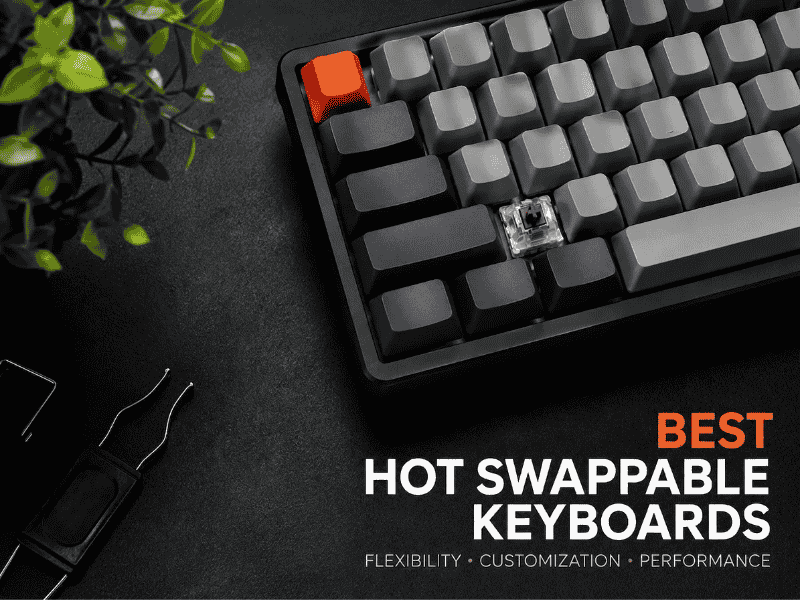
Looking for the Best Hot Swappable Keyboards? We compare socket type, QMK/VIA support, and layout across 8 picks so you buy the right one.
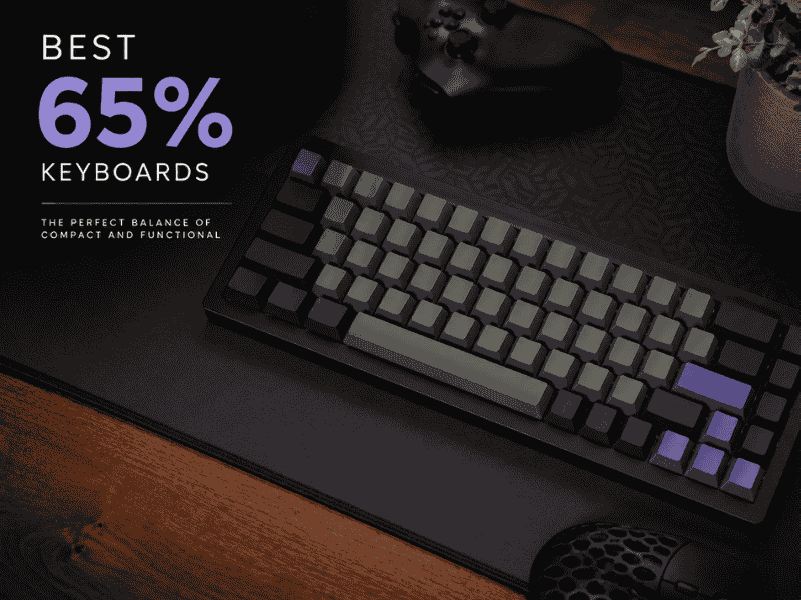
Explore the best 65% keyboards with compact layouts, customizable switches, and premium builds for typing and gaming in tight spaces.
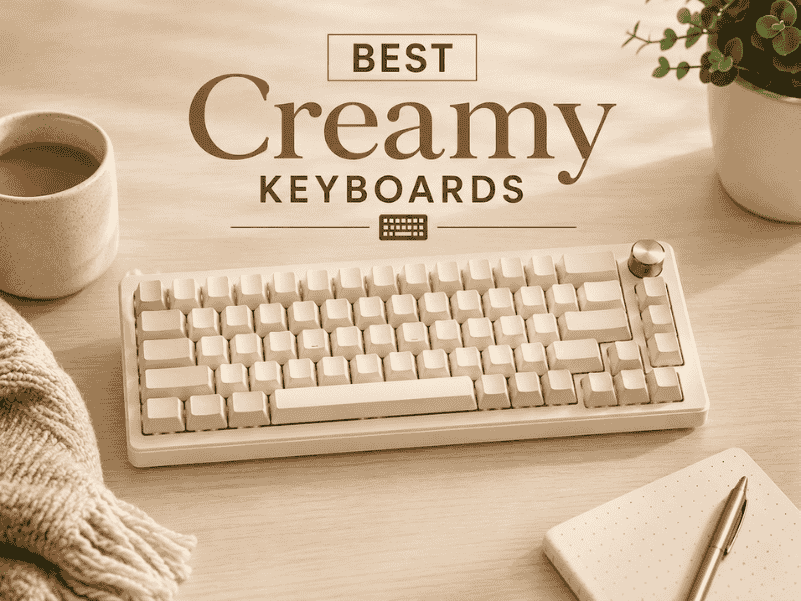
Discover the Best creamy keyboards with silky-smooth switches, luxurious keycaps, and ergonomic designs experience ultra-satisfying, buttery typing every day!
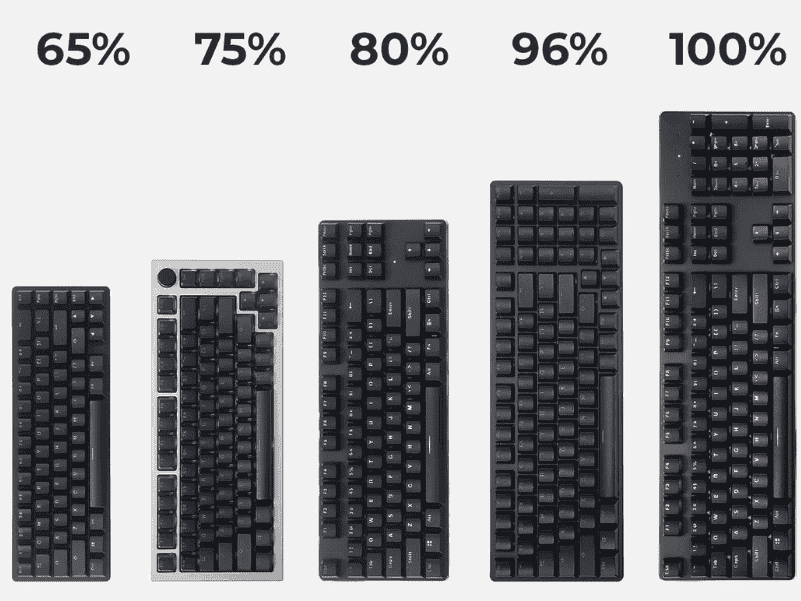
The Ultimate Keyboard Size Guide for Beginners helps you choose the right layout, dimensions, and ergonomics for comfortable, efficient typing and gaming.