
Mechanical Keyboard Switch Leaves Explained: The Hidden Metal That Defines Your Feel

Centered Image A standard mechanical keyboard switch (left) compared to its internal structure (right). The tiny metal leaf, indicated by the black arrow, is responsible for tactility, sound, and actuation. When you think about what makes a mechanical keyboard switch feel the way it does, your mind probably goes straight to the spring. Lighter spring
Mechanical Keyboard Switch Actuation Force: What It Actually Means (And Why You’ve Been Reading It Wrong)

When I first got into mechanical keyboards, I did what most people do, opened a switch chart, saw numbers like “45g” and “62g,” and guessed. I grabbed Cherry MX Reds assuming lighter meant faster. Big mistake. Two weeks later I was making typos I never made on a membrane keyboard. The problem wasn’t the switch.

What Is a TKL Keyboard? Layout, Use Cases, and Who It’s Best For

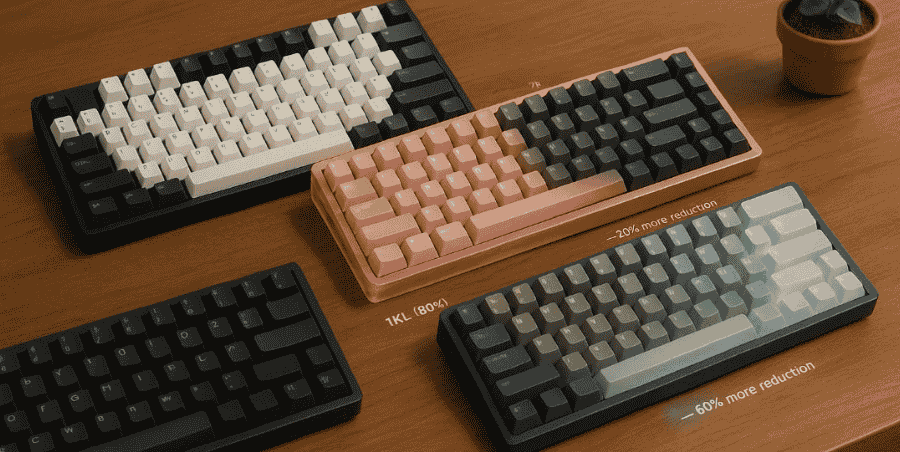
TKL stands for Tenkeyless, which simply means a keyboard layout that removes the numeric keypad (the number block usually located on the right side of a full-size keyboard). A traditional full-size keyboard typically includes: A TKL keyboard keeps everything except the numeric keypad. That’s the only structural change, which is why many users see it

What are Alice Mechanical Keyboards? The Ergonomic Layout Explained

img

Your wrists hurt after long typing sessions, but a full split keyboard feels too extreme. You’re not alone. Millions of keyboard users live in this middle ground – wanting better ergonomics without relearning how to type on two separate halves. That’s exactly where the Alice mechanical keyboard lives. An Alice keyboard looks like a standard 60% or

2